About Manual Beating And Freeness Tester
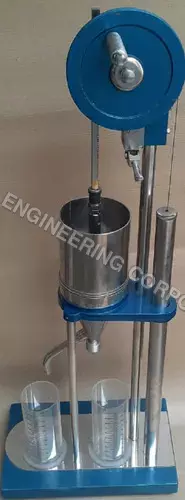
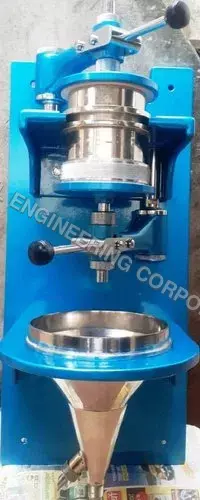
Get invincible precision with our Manual Beating And Freeness Tester-featured for its valuable role in laboratory pulp testing. Crafted with a mild steel frame and protective powder coating, this reliable device boasts a transparent acrylic beaker and corrosion-resistant, stainless steel discharge valve. The rotary handwheel offers sublime user control, and its single-specimen format ensures consistent results. Add to Cart for effortless, low-maintenance testing with quick SR measurement (0-100). Rely on its manual design-no power needed-for rapid, accurate pulp freeness evaluation every time.
Direction of Use, Material Feature, and Commercial Application
To operate the Manual Beating And Freeness Tester, fill the beaker with pulp, use the rotary handwheel for physical agitation, and monitor the graduated beaker for readings. The instrument's mild steel frame with powder coating and stainless steel components ensure durability and resilience. This valuable device suits commercial laboratories, manufacturers, and research centers, helping assess pulp quality efficiently while maintaining high reproducibility and excellent material integrity.
Supply Ability, Payment Terms, Main Export Markets
Our Manual Beating And Freeness Tester is available for reliable shipment with competitive delivery rates across India and other export destinations. With robust packaging and organized transportation partners, customers receive timely delivery with minimal hassle. Standard payment terms are accepted to support seamless transactions. We supply to laboratories worldwide, ensuring availability in main export markets, backed by responsive customer support and secure distribution channels for each order.
FAQ's of Manual Beating And Freeness Tester:
Q: How does the Manual Beating And Freeness Tester operate?
A: The tester functions through manual physical movement; by rotating the handwheel, pulp is agitated, allowing for quick and reproducible SR measurements using the graduated beaker.
Q: What materials are used in the construction of this tester?
A: The frame is made from mild steel with a powder-coated finish, the beaker is transparent acrylic, and the discharge valve is crafted from corrosion-resistant stainless steel for longevity.
Q: When should laboratories use the Manual Beating And Freeness Tester?
A: It is best used during pulp freeness evaluations to determine pulp drainability in compliance with standard laboratory testing procedures, particularly for research, quality control, and manufacturing audits.
Q: Where is this tester commonly supplied and exported?
A: We supply and export to laboratories, research institutes, manufacturers, and quality assurance facilities both across India and in major international markets.
Q: What are the benefits of using this manual tester?
A: Benefits include reliable accuracy (1 SR), low maintenance, easy operation without power, quick test cycles, corrosion resistance, and consistency in single specimen testing.






 Send Inquiry

 Send Inquiry
 Send Inquiry
 Send SMS